
Colorado County Warrant Checks
One channel is rarely enough when a missed court date, a traffic citation, or a case notice raises a question about an active warrant. The County Clerk posts a public criminal case index. County courts, the JPs, and the city courts each keep separate records, though, so a Colorado County warrant lookup that stops at one portal can miss the court that actually holds the case. The sheriff's site offers no public all-warrant search form. Treat any result as a lead. It should identify the issuing court, not just echo a familiar name. Before calling, gather the legal name used on the case, date of birth, the citation or cause number, and the city or precinct. Keep those details on official sites, or share them only after confirming who actually answered the phone. For a personal Colorado County warrant check, precision up front saves callbacks later.
- Search the County Clerk's Tyler Odyssey criminal portal, then note the case number and court.
- For a city citation, call Columbus, Eagle Lake, or Weimar Municipal Court. For a county traffic ticket, contact the JP precinct printed on it.
- Use the official Texas FTA status tool for your own driver's-license hold when the issue is a reported traffic matter.
- Call Sheriff's Communications at 979-732-2388, extension 1 for routing, or ask the issuing court how to request its existing records.
- Ask the court what the process is called, whether it remains active, and how to confirm any payment, appearance, bond, or recall.
A relative can help track down a notice or citation in Colorado County. Still, only the court's answer controls the case.
Colorado County Warrant Checks Need Several Courts
Colorado County runs two higher trial-court layers, four JP precincts, and municipal courts in Columbus, Eagle Lake, and Weimar. Any of the lower courts can hold its own Class C matter, traffic case, ordinance violation, failure-to-appear warrant, or capias pro fine. The County Clerk's criminal portal does not promise to gather all of them. The sheriff posts no public warrant roster.
The Justice Courts directory links every Colorado County precinct. Match the citation to its court before calling, since one office cannot recall process issued by another.
Warrants in Colorado County: The Main Types
The word warrant covers process created at different stages, and the differences matter in Colorado County. An arrest warrant follows a judge or magistrate's probable-cause review. A bench warrant, often tied to failure to appear, answers a missed court obligation. A capias pro fine enforces an unpaid final fine and costs. A search warrant authorizes a search for evidence. It is not a tool for a personal warrant lookup.
| Process | How It Arises | Where to Start |
|---|---|---|
| Arrest warrant | Judicial review of a sworn complaint or other authorized basis | Issuing court, then sheriff or serving agency |
| Bench or FTA warrant | Missed date, plea, or court requirement | JP, municipal, County, or District Court that set the case |
| Capias pro fine | Unpaid judgment fine and costs | Issuing JP or municipal court |
| Search warrant | Request to search a described person, place, or property | Issuing court and applicable access rules |
The label matters in Colorado County. An unpaid fine, a missed setting, and new arrest process each call for different court action.
Colorado County Capias and Arrest Warrants
Texas uses capias for arrest process and capias pro fine to enforce a fine-and-cost judgment. The two labels are not interchangeable. Under Chapter 43, a person can seek recall of a capias pro fine before execution by giving notice and obtaining a hearing, or by appearing and making a good-faith effort to resolve the judgment. The issuing court decides how that route applies in a Colorado County case. The County Clerk's criminal-records page links the case search, and the Texas Code of Criminal Procedure, Chapter 43 sets out the fine-enforcement provisions. One caution: paying through a general portal does not prove a warrant was recalled. Confirm with the court.
Colorado County Warrant Records: What They Show
A public case result may link a court file to its process, but visible fields vary by portal and access limits. Colorado County publishes no confirmed warrant-number pattern, so an empty search screen proves nothing. Read the case number and court first. Then confirm status with that court.
| Case number | Format not published; ask the clerk to confirm the exact case or citation number. |
|---|---|
| Process label | May identify an arrest warrant, FTA, capias, or capias pro fine when the portal exposes it. |
| Issuing court | District, Constitutional County, JP precinct, or city municipal court. |
| Offense and date | May show the citation or charge and the filing, setting, or issue date. |
| Bond or balance | Ask the court for the current amount and accepted way to resolve it. |
| Status | Active, served, recalled, quashed, or another local code; request a plain-English explanation. |
Treat the fields as a reading checklist. No Colorado County portal promises to display every item.
Colorado County Warrant Index Leaves Gaps
The County Clerk Records Public Access portal warns that an index is a finding aid, not a certified record. It asks users to try spelling variations, and images can be unavailable during system backups. The Tyler criminal portal may also leave out a new warrant, a sealed case, a juvenile matter, a lower-court case, or one not yet entered. A gap is a reason to call the Colorado County court, not a reason to guess. Re:SearchTX covers civil and probate documents; it is not a statewide warrant index. If the online route fails, give the clerk a date range, court, and case number, and ask what record can be inspected or copied. The county public-information page links a Texas Public Information Act request form. Fees and field inventories vary, so ask the county before sending a request.
Colorado County Warrants: Who Issues, Who Serves
Courts and magistrates issue process in Colorado County; law-enforcement officers execute it. The sheriff's office lists divisions for jail, communications, civil process, patrol, investigations, and constables. It posts no public criminal-warrant search. Its official site gives 2215 Walnut Street in Columbus and 979-732-2388 as the main phone.
Colorado County Sheriff's Office
2215 Walnut Street
Columbus, Texas 78934
979-732-2388
The sheriff can route a question or serve process. Only the issuing court can set a case, recall a warrant, or say what a payment does. The county sheriff profile links the Colorado County Sheriff's Office, and the constable pages emphasize civil service. No agency page here doubles as a criminal warrant list.
Colorado County Warrant Call Routing
Columbus packs its public offices into a few blocks, but a warrant file stays with the court that issued it. The County Courthouse sits at 400 Spring Street. The County Clerk and JP3 share the annex at 318 Spring Street. JP1 and the sheriff work from 2215 Walnut. JP2 sits in Weimar. JP4 covers Eagle Lake. For a Colorado County warrant, the issuing court matters more than whichever building sits closest. The county home page gives the official building layout. After hours the sheriff's site steers emergencies to 9-1-1, while a warrant question belongs with the court or the sheriff's non-emergency channel. Start from the address and phone on your citation. Confirm the right Colorado County office before driving. The sheriff's communications page posts its routing contact, the companion Jail Division page lists extension 2 without bond-window hours, and the courthouse and county-navigation page maps the public building cluster for visitors.
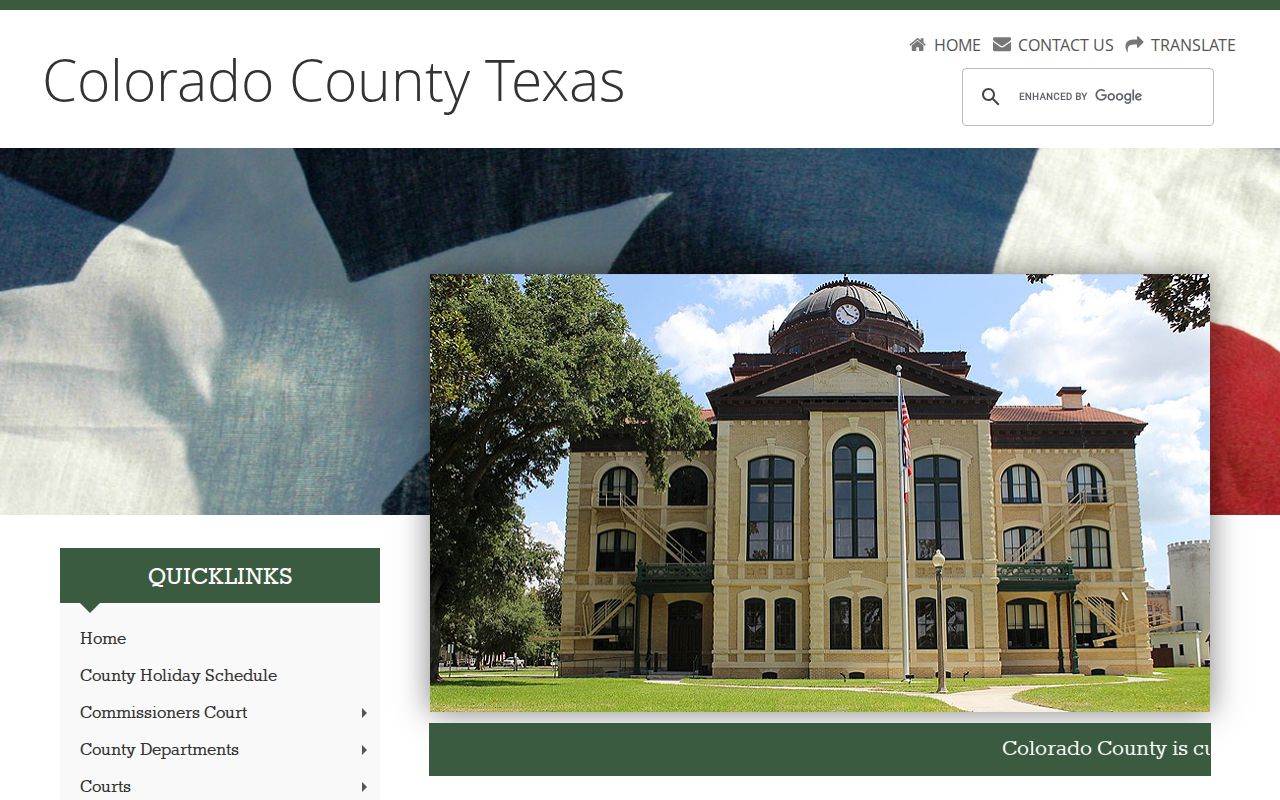
Follow the court named on your Colorado County record, even if another office sits closer. The sheriff's public mission page outlines its divisions and general contact route.
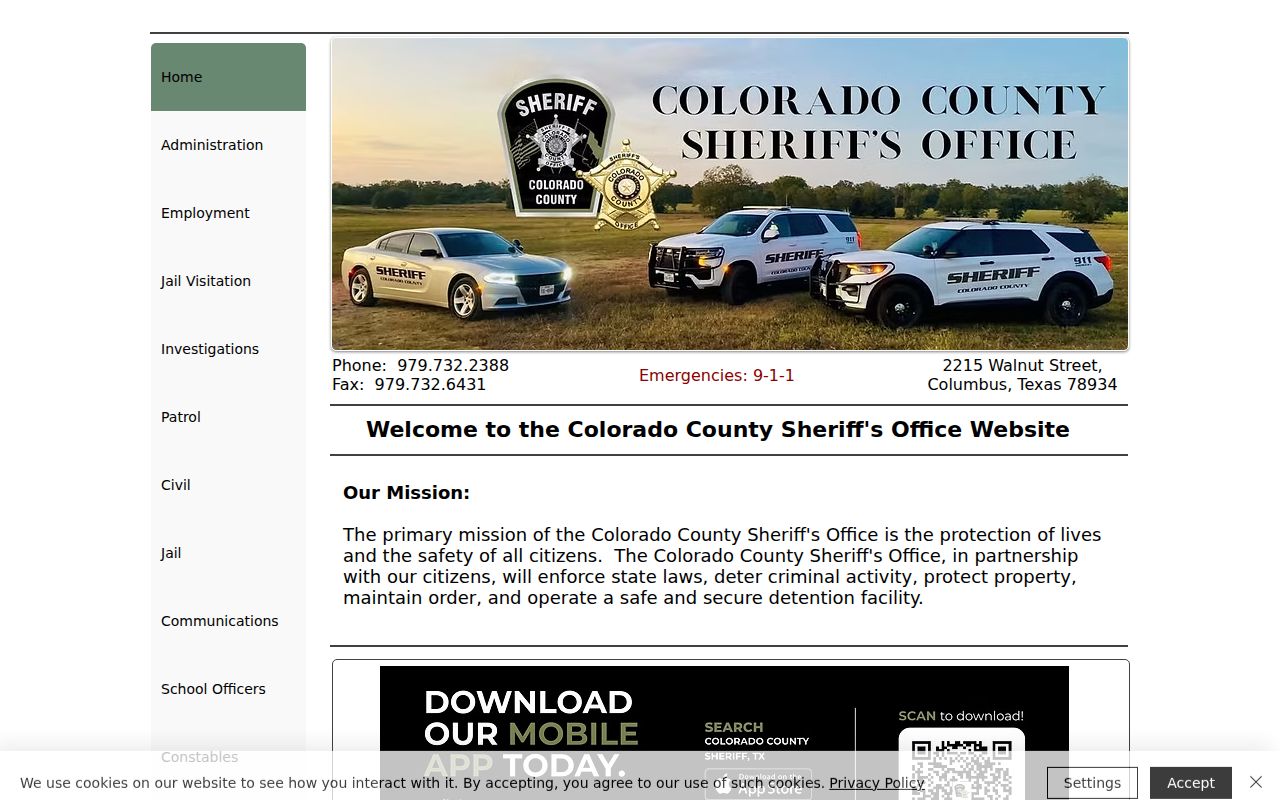
The Colorado County sheriff's office serves and routes paperwork; it is not the issuing court that can recall or quash a warrant.
Handling a Colorado County Warrant
Name the case and the issuing court first. Then call the Colorado County clerk or coordinator and ask what the record shows, whether a hearing or payment is open, and where a voluntary appearance should happen. No walk-in warrant counter is published. Nor are a bond schedule or jail bond-window hours.
Important: Speak with a Texas attorney before appearing in person; the right location and release terms depend on the issuing court and current case record.
After an arrest, Texas procedure has a magistrate handle rights, warnings, and bail. The Jail Division contact page offers public routing only. It carries no bond instructions. A call, a receipt, or a lifted license hold does not close the underlying Colorado County case; only the issuing court can do that. The official Sheriff's Communications page posts the non-emergency route.
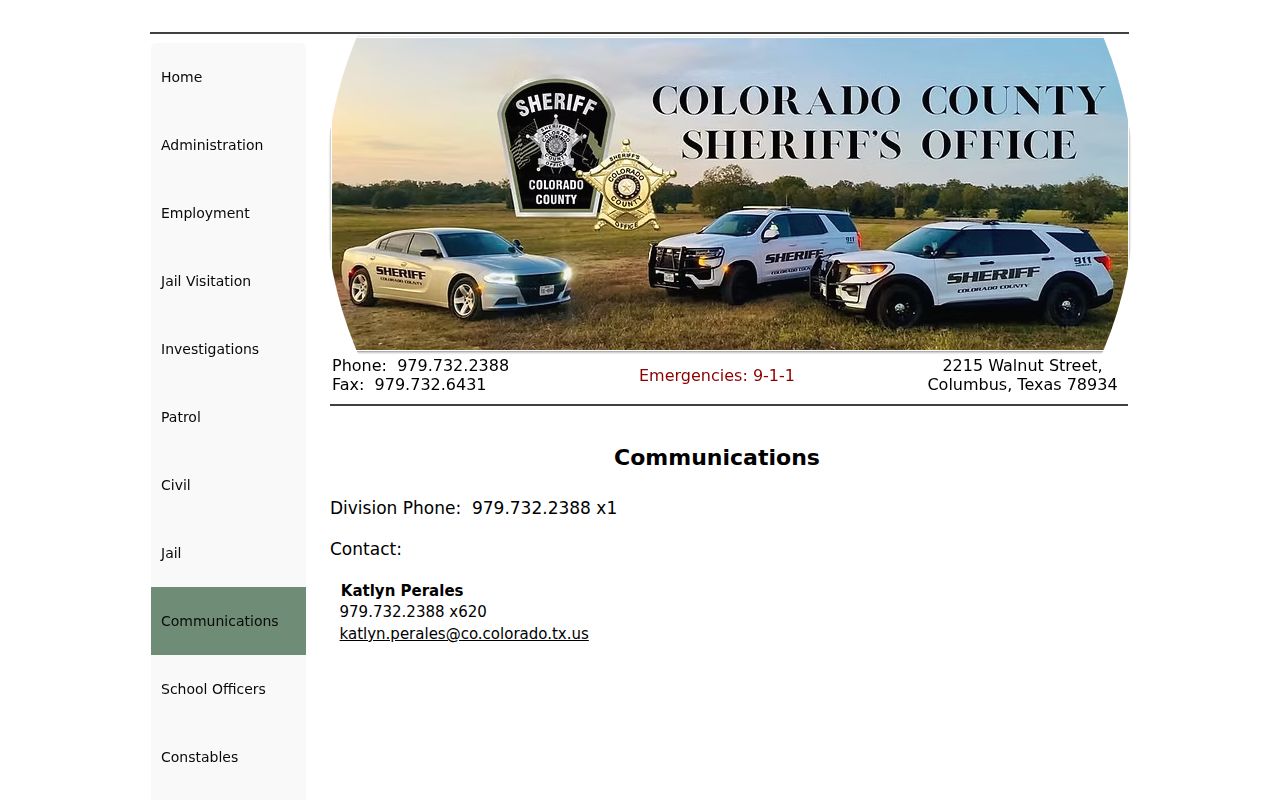
Call before you visit. Staff can steer you to the court, the jail, or another Colorado County office. The Jail Division page gives the jail's contact route. Its facility view is context only, never a cue to arrive unconfirmed.
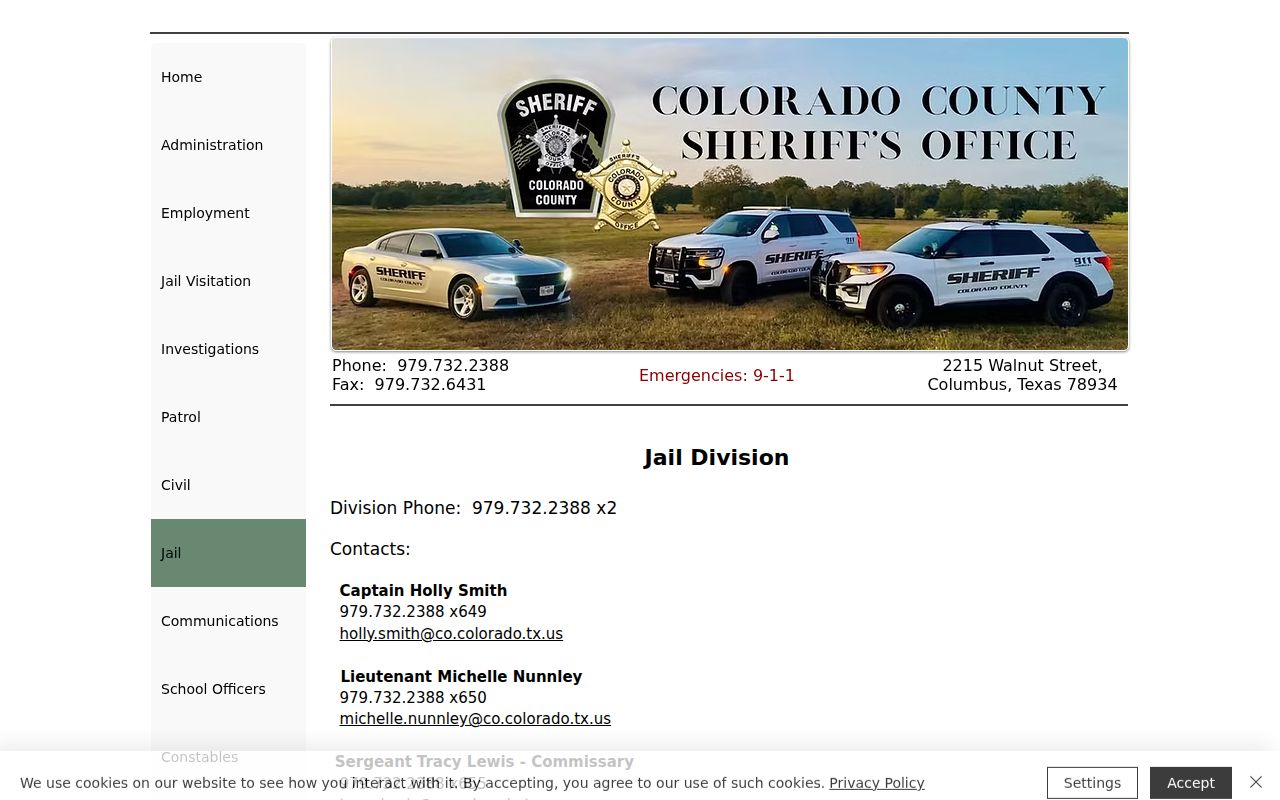
Confirm bond, identification, timing, and accepted funds with the office handling the case.
Warrant Record Access Under Texas Law
Access turns on the record and its status. Texas open-records law covers what Colorado County government bodies hold, with exceptions. Court rules and other statutes can block active-investigation, sealed, juvenile, or protected material. A public index is never a certified copy.
Key rules:
Texas Government Code, Chapter 552 provides access to public information, with statutory exceptions.
Section 552.108 can protect law-enforcement information when release would interfere with investigation or prosecution.
Texas Family Code, Chapter 58 places special limits on juvenile records.
Texas Judiciary access policy explains that court-record access has its own limits.
A written request can seek existing records. No Colorado County office must create a certificate saying a person has no warrant.
City Warrant Records in Colorado County
All three incorporated cities run their own municipal courts, apart from the four Colorado County JP precincts. Columbus holds court at City Hall. Eagle Lake's court sits in the Municipal Building. Weimar links a municipal search plus an official outstanding-warrant folder, and the population figures are 2020 Census counts reproduced in the county's 2025 hazard-mitigation plan.
Columbus Warrant Records
3,699 residents; Columbus Municipal Court handles city traffic, ordinance, and Class C cases.
Eagle Lake Warrant Records
3,442 residents; its city court is separate from JP4 at North McCarty.
Weimar Warrant Records
2,076 residents; city portal and court folder serve Weimar municipal cases.
The city records route starts with the municipal court named on a city citation.
Columbus City Warrant Appearance Rules
Columbus Municipal Court sits in City Hall at 605 Spring Street, open weekdays from 8:00 a.m. to 4:30 p.m. The city's reply form is blunt. A phone call does not count as an appearance. Its 2020 form adds a $50 warrant fee after a missed date. Confirm the current amount with the clerk. Ask which response choice fits your Colorado County citation before mailing anything. A city call never replaces a required filing.
Eagle Lake Municipal Warrant Payment Steps
Eagle Lake Municipal Court meets in the Council Chambers at 100 East Main Street, reachable at 979-234-2640. Online payment covers only some violations. Others demand an appearance or clerk paperwork. If you want to contest a charge, seek deferred disposition, or preserve a driving-safety option in this Colorado County city, ask before paying.
Weimar Municipal Warrant Search Fields
Weimar's Tyler portal offers several lookup routes. Search by citation and date of birth, driver's-license details, Social Security number and date of birth, plate and state, name and date of birth, or business name. Use sensitive identifiers only on the official city portal. The court's Outstanding Warrants folder is separate. Open that municipal record source from the current Weimar court page in Colorado County.